
Clear Vision Without LASIK: The EVO ICL Option
If you are nearsighted (you can see up close without your glasses or contacts, but NOT far away) and not a candidate for LASIK — or you simply want a high-quality, reversible alternative to laser vision correction — the Implantable Collamer® Lens (ICL) may be an excellent option.
As a refractive surgeon who has been implanting ICLs for over a decade, I have seen firsthand how this technology can provide patients with clear vision, freedom from glasses and contacts, and long-term flexibility for the future. In my practice, we use the advanced STAAR Surgical EVO ICL platform, designed to enhance safety and optimize visual outcomes.
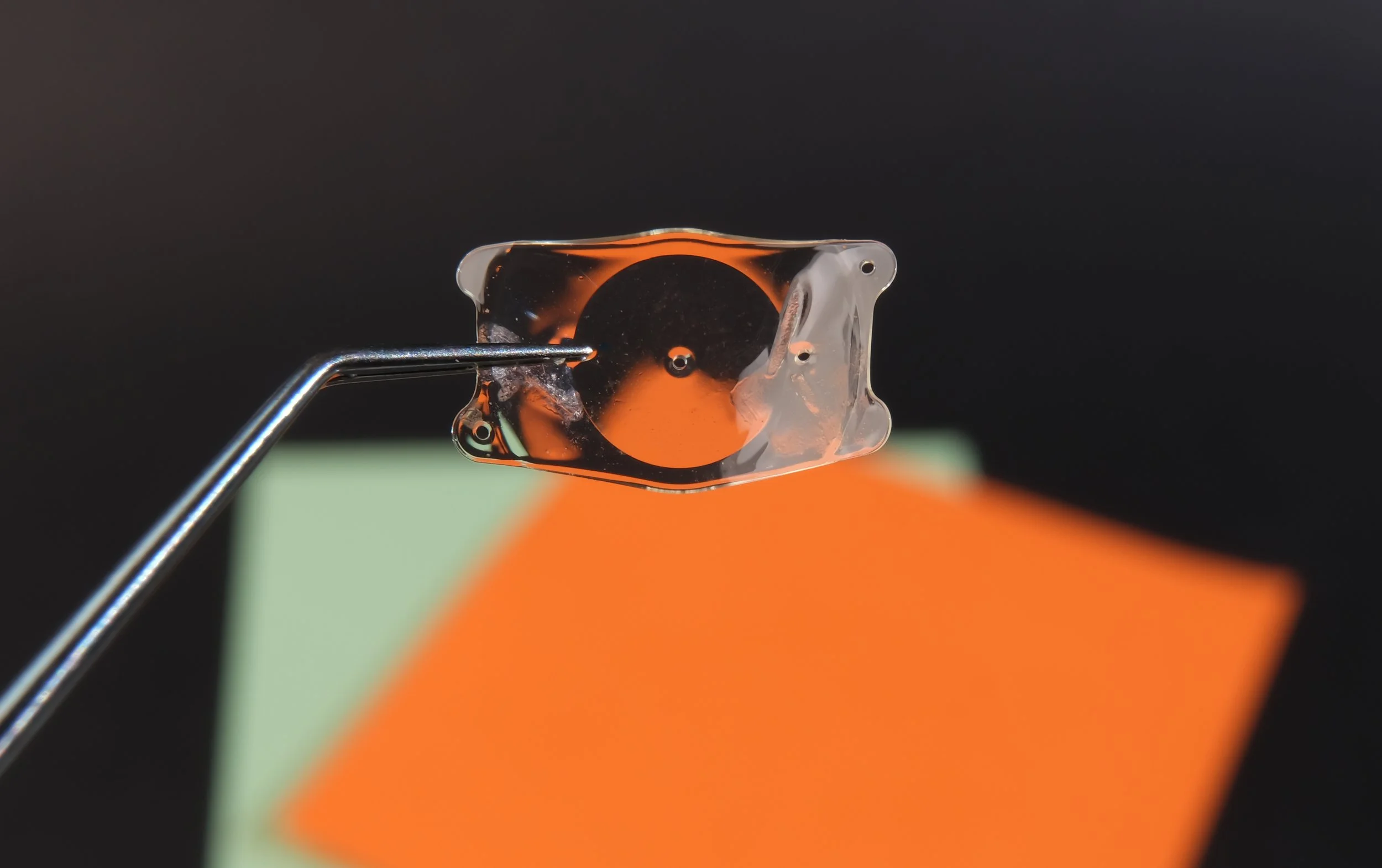
EVO Implantable Collamer Lens used for myopia correction
What Is a Phakic Intraocular Lens (ICL)?
A phakic intraocular lens is a thin, soft lens implanted inside the eye to correct nearsightedness (myopia), with or without astigmatism. Unlike cataract surgery, your natural lens remains in place.
The EVO ICL is positioned behind the iris (the colored part of the eye) and in front of your natural lens. Once implanted, it works with your eye’s natural optics to provide sharp, clear vision.
Unlike LASIK or PRK:
No corneal tissue is removed
The cornea remains structurally intact
The procedure is reversible

The EVO ICL is a phakic intraocular lens designed to safely correct moderate to high myopia.
Who Is a Good Candidate for ICL?
ICL is often ideal for:
Adults ages 20 to 40
Patients with myopia greater than -3.00
Patients with moderate to high myopia who may not qualify for LASIK
Individuals with thin corneas
Patients with myopia with or without astigmatism
People seeking long-term flexibility and future options
ICL is especially attractive for patients who want excellent quality of vision without permanently reshaping their cornea.
The best way to determine candidacy is with a comprehensive refractive consultation.
Is ICL Safe?
Safety is the first priority in any refractive procedure.
Key safety points:
The procedure is reversible — the lens can be removed if needed
The natural lens remains untouched
It does not interfere with future cataract surgery
The cornea remains structurally intact
The EVO design improves fluid dynamics within the eye
As with any surgical procedure, there are risks, including infection, inflammation, elevated eye pressure, or cataract formation. However, careful screening, advanced technology, and meticulous surgical technique significantly reduce these risks.
With over a decade of experience implanting ICLs, I take a conservative, safety-first approach to patient selection and surgical planning.
What Is the Procedure Like?
Many patients are pleasantly surprised by how straightforward and comfortable the procedure is.
Before Surgery
You will undergo detailed measurements of your eyes to ensure precise lens sizing and optimal results. We will make sure you are a candidate, ensure that the EVO ICL will meet your goals and review you prescriptions. There will be a non dilated screening and testing visit and a dilated discussion visit with Dr. Seefeldt prior to surgery.
The first step is a comprehensive consultation where we will:
Evaluate your eye health
Measure your corneal thickness and anatomy
Review your prescription stability
Discuss risks, benefits, and alternatives
Determine whether ICL is the safest and most effective choice for you
The Day of Surgery
The procedure typically takes about 20–30 minutes
It is performed in our Federal Way ambulatory surgical center
Numbing drops are used and relaxing medications for any anxiety — no general anesthesia, or needles are required
Most patients experience little to no discomfort
After Surgery
Vision often improves within 24–48 hours
Most patients return to normal activities quickly (activity restrictions for 1 week)
Follow-up visits are included to ensure proper healing and eye pressure stability
Recovery is generally fast and smooth, especially compared to what many patients expect.
Does ICL Limit My Options Later in Life?
No. This is one of the major advantages of ICL.
Because your natural lens remains in place:
You can still have cataract surgery in the future
The ICL can be removed or exchanged if necessary
The procedure does not “burn bridges” for future eye care
This flexibility makes ICL particularly appealing for younger adults who want long-term options preserved.
Freedom Without Compromise
Patients often choose ICL because they want:
Freedom from glasses and contact lenses
Clear vision for work, travel, and active lifestyles
Reduced dependence on daily lens wear
A solution that feels natural and stable
Many report excellent quality of vision and strong performance in low-light conditions.
Why Experience Matters
ICL implantation is a precise, measurement-driven procedure. This is a measure twice (or more) cut once situation. Proper patient selection, accurate sizing, and meticulous surgical technique are critical.
With more than a decade of experience implanting ICLs and using the advanced STAAR EVO ICL platform, I focus on:
Careful screening and candidacy evaluation
Personalized surgical planning
Safety-centered decision making
Long-term follow-up and support
My goal is not just clear vision — it is clear vision delivered safely and responsibly.
Take the Next Step Toward Visual Freedom
If you are ready to explore a safe, reversible, and flexible alternative to LASIK, ICL may be the solution you’ve been looking for.
Schedule your personalized ICL consultation with Dr. Seefeldt today and learn whether the STAAR EVO ICL is right for you.
