


Advanced Cataract, LASIK and Comprehensive Eye Care in Federal Way WA
Providing comprehensive eye care from dry eye treatment to premium cataract surgery, refractive surgery, blepharoplasty, glaucoma care, and retinal monitoring. You will receive a clear evaluation and a customized plan designed to protect your vision, improve comfort, and help you see your best. With thousands of procedures performed each year, Dr. Seefeldt is experienced, up to date and known for her calm under pressure.
Explore

Cataract Surgery
01
-
A cataract is clouding of the natural lens inside your eye. Almost everyone develops clouding of the lens with age just like developing grey hair.
-
Cataracts can make driving, reading, and daily tasks frustrating or unsafe. Because these changes happen slowly we adapt to them and often don’t notice the change over time. Cataracts cannot be cured with drops or glasses once they reach this stage, so surgery is the answer.
-
Cataract surgery removes the cloudy lens and replaces it with a clear intraocular lens (IOL). The surgery uses laser and ultrasound and takes about 10 minutes in most cases. We will help you choose the best lens option for your goals, including reducing dependence on glasses when appropriate.

RLE
02
-
RLE stands for refractive lens exchange. It is similar to cataract surgery but done before a true cataract forms. The natural lens is removed and replaced with an intraocular lens chosen to reduce dependence on glasses.
-
For some people, especially those who want a more permanent solution than laser vision correction, RLE can be a great option. It can also address early lens changes and reduce future cataract concerns. Because the lens is removed, this is a permanent decision.
-
RLE is a 10 minute outpatient procedure. The best IOL is determined by advanced measurements of eye shape to match the lens choice to your goals. We will review your prescription, lifestyle, and tolerance for visual tradeoffs such as halos with certain premium lenses. You will leave with a clear plan and realistic expectations. There is no perfect lens that works in every situation for every person. Knowing how you define success for your vision will help us choose the best IOL for you.

ICL
03
-
ICL stands for implantable collamer lens, also called a phakic intraocular lens. Dr Seefeldt has been placing ICLs for over a decade and uses the EVO ICL platform from Staar Surgical. It works like a permanent contact lens placed inside the eye, without removing your natural lens. It is often ideal for people who are not candidates for LASIK or PRK but are not presbyopic (over 21, under age 45)
-
If you have moderate to high myopia, laser surgery may not be safe or accurate enough. For many people with prescriptions between about -3.00 and -16.00, an ICL can provide excellent vision with high quality optics. It can be a great option when you want freedom from glasses but need an alternative to corneal laser surgery. At your evaluation we will measure your eye to ensure the ICLs are made in a size that will work for your eyes.
-
ICL surgery involves placing your customized lens through a small incision during an outpatient procedure. It is done under local anesthesia (no needles) and takes about 10 minutes per eye. Most patients recover quickly and are thrilled with the clarity. ICL is not usually covered by insurance.

LASIK and PRK Surgery
04
-
If you are nearsighted, farsighted, or have astigmatism, your prescription comes from how your cornea and lens focus light. Glasses and contacts correct the focus, but they do not change the eye itself. Myopia is near sightedness - this means without your glasses or contacts on your see better up close. Astigmatism is the shape of the eye being different in one area compared to another, many people think of a football instead of a basketball. This causes blur or doubling of images.
-
If you are tired of glasses or not tolerating contacts, laser vision correction can give you more freedom in daily life. The best candidates are often between ages 20 and 40, with a stable prescription and healthy eyes. It is not recommended to have LASIK or PRK if you have thin corneas, are pregnant or nursing or have certain health conditions. The best way to know if you are a good candidate is to schedule a free screening. We will evaluate your eye health, corneal thickness, and lifestyle to recommend the safest option for you. Your visit includes detailed testing and a clear plan for what to expect.
-
LASIK and PRK use lasers to permanently reshape the cornea by removing tissue to correct your prescription. It takes about 10 minutes for the procedure and the laser times are less than 1 minute. We give you relaxing medicine for the procedure because most people are nervous. You will need to take it easy for 1 week and take eye drops to help with healing.

Blepharoplasty
05
-
Dermatochalasis is when the skin on the upper eyelids gets heavy. This is common with aging and is often genetic. Some people notice it affects their vision, especially in the upper field of vision. Blepharoplasty is a procedure to remove excess upper eyelid skin that droops or feels heavy.
-
Heavy lids can make you look tired or age your appearance and can interfere with daily activities like reading and driving. If the skin blocks part of your vision, it becomes more than cosmetic. Many people with heavy lids feel better as soon as they lift the skin on the upper lid. A proper exam helps determine whether it is affecting function and covered by insurance or is considered cosmetic.
-
Blepharoplasty is a straightforward procedure that removes extra skin and restores a more open eyelid position. It is an outpatient surgery with social downtime of about 2 weeks for most people. Many patients describe it as “lifting the shades” on their vision. We will evaluate your eyelids, review your goals, and explain what results you can expect.

Retina Care
06
-
The retina is the light sensing tissue in the back of the eye. The macula is the most sensitive part of the retina and the part we use for reading and fine details. Conditions like diabetic eye disease and macular degeneration can damage the retina and affect central vision.
-
Retinal diseases are a leading cause of vision loss. The most common retinal diseases I treat are diabetes, macular degeneration (wet and dry) and retinal swelling or bleeding from blood flow issues. If you have these conditions or a strong family history regular monitoring helps us catch changes before they cause permanent damage. The earlier we treat, the better the chance of preserving vision.
-
Dr. Seefeldt provides comprehensive retinal evaluations, including OCT imaging to monitor the macula and retina. Treatment may include close monitoring, medication guidance, and retinal injections when indicated. Your care plan is tailored to your diagnosis and risk level. Dr. Seefeldt does not do retinal surgeries but has a network of trusted colleagues she can refer to as needed. (if you have a macular condition please download and print the amsler grid linked here for your daily home monitoring - call if you notice changes)

Glaucoma
-
Glaucoma is an eye disease that damages the optic nerve, often related to eye pressure. There are two main types of glaucoma. Open angle glaucoma is a type when the angle or access to the drain inside the eye is open. Narrow or angle closure is the type where the access to the drain is narrow or closed. Because the eye is always producing fluid the drain has to always be letting fluid out. If the drain isn’t working the eye pressure gets too high and can damage the nerve.
-
Glaucoma can slowly and permanently steal your vision. Once the nerve is damaged we can’t fix or reverse it, we can only try to slow further damage. Early detection is the best protection. Early detection includes checking eye pressure, corneal thickness, an Optic nerve exam and OCT and visual field test.
-
Treatment depends on your type and stage of glaucoma. In general I see this as a plumbing problem. We either need your eye to make less fluid or get it to drain better. We may use medicated drops, laser treatment to improve fluid drainage, or surgical procedures when needed. For most patients, early laser treatment is the safest and best option that can reduce pressure and lower risk over time. If you have glaucoma and are having cataract surgery, I offer combined procedures called minimally invasive glaucoma surgeries that include stent placement or gonitomy.
07

Dry and Wet Eyes
08
-
Dry eye is tricky because it can have so many different presentations. For some people it is sensitive red or burning sensation. Some feel a gritty sensation like there is something in their eyes. Some don’t feel anything but as they read or drive or work on the computer their vision gets blurry, they can blink it away for a moment but then it gets blurry again. Some people even have watering due to ‘dry eyes’. Dry eyes are usually a problem with the tear film, not just a lack of tears.
-
Dry eye affects comfort and can cause fluctuating vision, especially with screen time, wind, or contact lens wear. Untreated dry eye can also interfere with accurate measurements before surgery and lead to blurry vision or pain after surgery. Getting the right diagnosis can make a major difference.
-
We start with a careful history and targeted testing to identify the cause, such as meibomian gland dysfunction, inflammation, or environmental triggers. Treatment may include lubricating drops, warm compresses, prescription medications, lid care, and in office therapies when appropriate. The goal is long term stability, not temporary relief.

The pathway to your best vision
Step 1: Consultation
At your consultation Dr. Seefeldt and her team will review your concerns and history. We will customize your testing to evaluate your ocular health and vision. Bring your glasses and last eye doctor note if you have it. Once testing is completed we will usually dilate your eyes and once you are dilated Dr. Seefeldt will complete an exam and discuss the findings and offer you a plan. (most consultations take 90-120 minutes and include dilated eye exam)
Step 3: Treatment
For most patients there is work/care I need you to do at home and work that I need to do for you in surgery, the laser center, or clinic. Please make sure you are doing your home care to achieve the best results.
Step 2: Plan
Once we understand your concerns, goals and eye issues we will make a customized plan for you. I will send you home with some educational materials and if needed we will contact your insurance for authorization for treatment. If you need additional testing we will get that scheduled.
Step 4: Follow up
Depending on your condition you may need regular follow up. We will discuss your long term care plan at a follow up visit.
Step 5: Enjoy
Enjoy your vision and always call if you are having an eye emergency or concern.

Am I covered?
Providers: Check your insurance here.
LASIK, PRK, ICL, RLE and cosmetic blepharoplasty are usually not covered by insurance. There are also out of pocket expenses for premium IOLs used in cataract surgery. We do our best to provide you transparent pricing and check with your insurance before surgery. Costs for refractive surgery range from $1,800 and eye to $8,000 an eye. Refractive surgery screenings are provided at no cost when not covered by insurance.
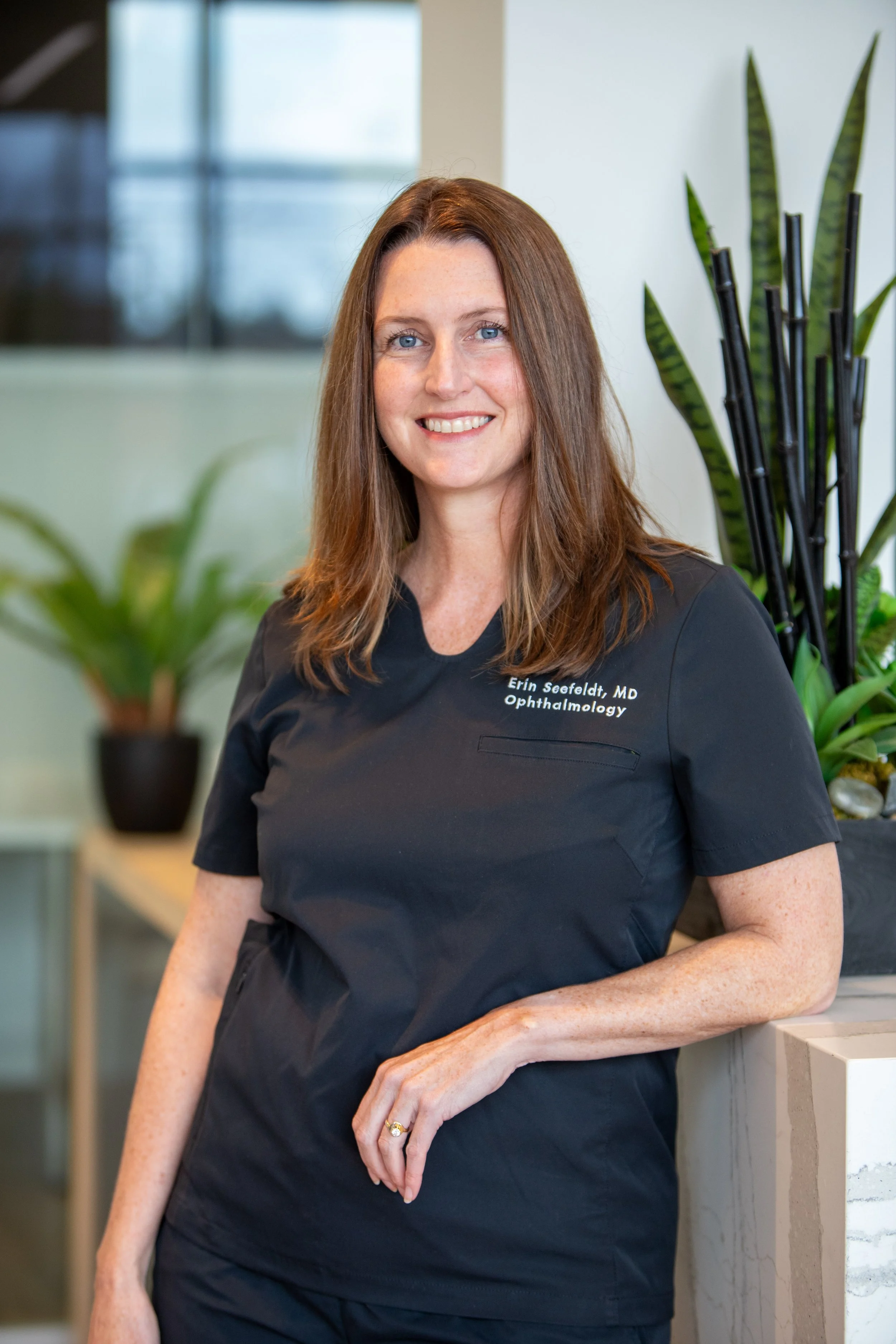
Where can I see Dr. Seefeldt
You can book here or call (800) 340-3595 please make sure you are booked with Dr. Seefeldt for surgical consultations. Plan for a 90 minute visit to allow for testing, history, exam and discussion.
If you are looking for non-surgical aesthetic treatments like botox, fillers or skin lasers please book a consultation at Catalyst medspa.
Frequently Asked Questions
-
Advanced or premium IOLs are a group of lenses that can be placed in the eye during cataract surgery that do more than the basic monofocal IOL. For most people this results in better vision when you don’t have your glasses on than if you chose a basic IOL. Premium IOLs include astigmatism correcting, extended depth of field, Multifocal and Light Adjustable IOLs. Most premium IOLs will be partially covered by insurance and partially out of pocket with a cost range from about $2,000 to $6,000 per eye.
-
Dry eye treatment is customized based on your symptoms and the cause of your dry eye. For many people the cause is meibomian gland dysfunction. This is treated with warm compress and artificial tears at first. Then adding medicated eye drops and in office procedures as needed.
-
Yes, LASIK, PRK and ICL are the most common treatments for Myopia and Astigmatism. The recommended treatment is determined by the level of myopia and astigmatism and the shape of your eye.
-
Most people are seeing better in 1-2 days. You will need to restrict activity and heavy lifting, rubbing the eyes for 1 week. You will likely be on medicated eye drops for about 4 weeks after surgery. Most people are healed and adapted to their new vision in 30-90 days.
-
The best way to know if you are a good LASIK or PRK candidate is to take the LASIK Quiz and schedule a consultation. Dr Seefeldt’s team will measure your refraction and get scans of your eyes. Then Dr Seefeldt can determine if you are a good candidate. Bring your last 2 glasses or contact lens prescriptions. Please do not wear contact lenses to your consultation as this makes scans less accurate.
-
If you have glaucoma you will always need some monitoring. It is not a condition that has a one and done cure. Your eye will need regular exams and pressure checks. Laser glaucoma treatment takes about 2-5 minutes and is one of the most efective ways to reduce risk.
-
The cataract which is being removed is made out of fibers like your hair. It doesn’t have any blood vessels or nerve fibers. For most people there is no pain and they do not need pain medications after surgery. During surgery your eye is numbed with topical numbing drops and gel and you will receive a relaxing tablet to help with anxiety - which is common.
-
Glaucoma can’t be cured. It can be treated. There is currently no cure. This means you will need to follow up regularly. Most glaucoma patients are checked every 6 months if stable.
-
RLE and cataract surgery are the same surgery. In a way your body will choose for you. If you have a cataract it is called cataract surgery, if you don’t the same procedure is called RLE. When people talk about RLE they are usually talking about having a surgery to reduce dependence on glasses or contacts. There is no perfect lens implant at this time that provides perfect vision at every distance. The most advanced and popular IOLs used in RLE and refractive cataract surgery right now are multifocals IOLS and light adjustable lenses.
-
Rest, relax and take your drops. If you are uncomfortable you can also use a gentle cold compress or oral pain medications.
-
Macular degeneration is thought to be a genetic condition with a few modifiable risk factors. If you snake - smacking cessation is the #1 thing to reduce risk. The AREDS2 vitamin is recommended for most people with AMD. Regular home checks with an Amsler grid (link) can assist with early detection and regular clinical visits can catch changes early.
-
The most common concerns after surgery are dry eyes, shadows in the peripheral vision (lens dysphotopsia) and developing a posterior capsular opacity (PCO).
-
There are several standards set by insurers that determine coverage. These include proof that it is impacting your vision as determined by measurements, photos and visual fields and vision complaints consistent with dermatochalasis obstructing vision. There isn’t a home test for this, so schedule a consult.
-
Yes, Dr. Seefeldt has a state of the art surgical suite that uses the latest technology to improve results. During your consultation Dr. Seefeldt will help you decide if laser assisted surgery will benefit you. Laser assisted surgery is not fully covered by most insurances.
Send a message to
Dr. Seefeldt’s team
If you have non-urgent questions please send a message here and one of Dr. Seefeldt’s team members will reach out. Please don’t leave private health info or use this for urgent eye issues. If you are having an eye emergency call the clinic or head to urgent care.